
Equity & Options
Market Research, Analysis
& Strategies

is the premier site for active option and equity traders offering real time coverage of markets via options activity alerts, technical set-ups, breaking news, in-depth research and much more.


Set-Ups

Talk

Weekly
market
View
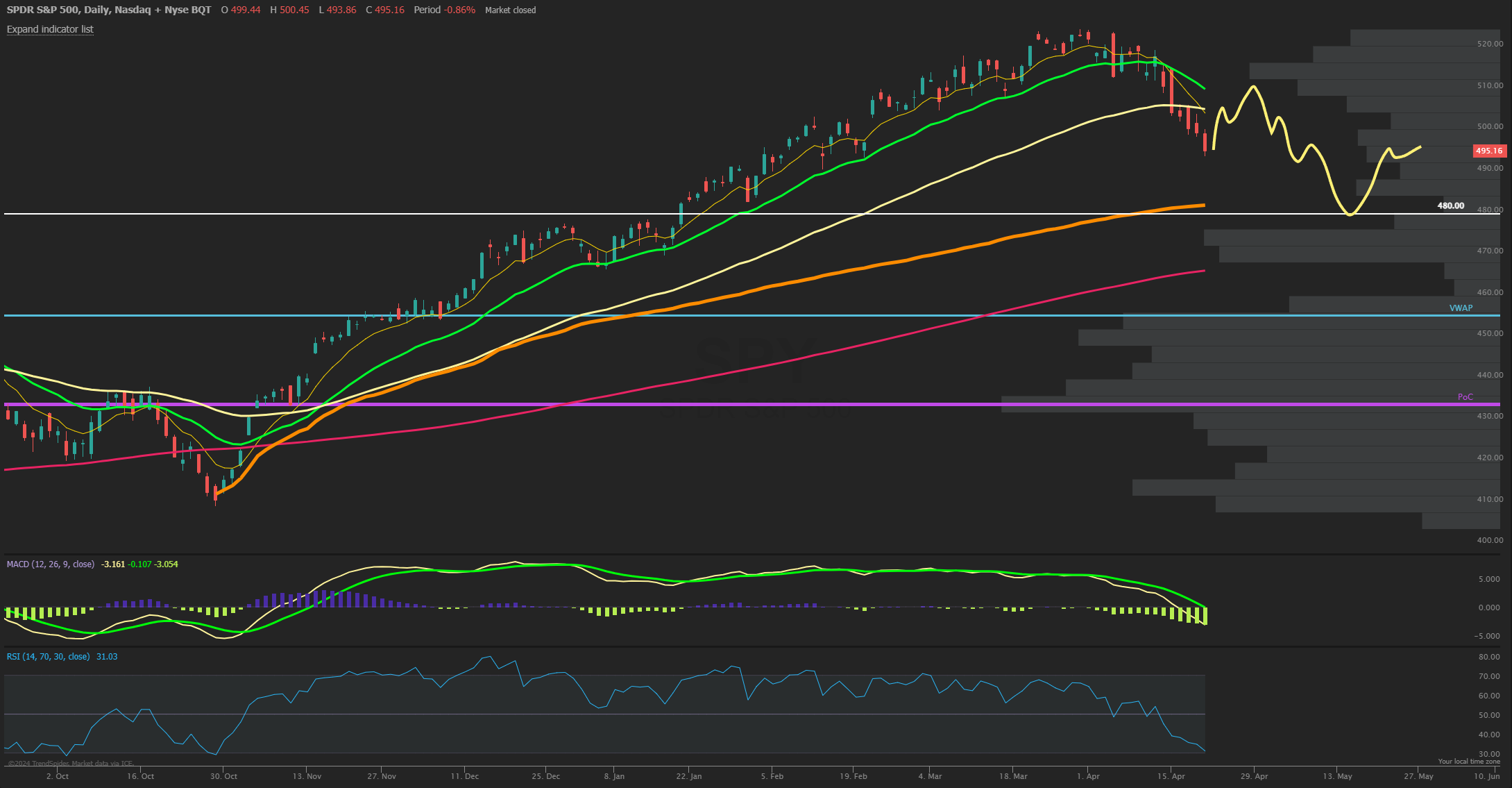
The SPX closed lower by -3% for the week that saw everyday close lower for one of the uglier weeks of the past year but not all that surprising based on what we have been seeing and warning of transpiring into the more bearishly tilted options market in a negative gamma status last week going into monthly expiration. These monthly OPEX weeks tend to keep the market in the direction of the short-term trend and then often can see a reversion to the mean the week after all those options expire. In this case that would point to a oversold snapback rally in the coming days likely, barring more headline news but I spent some time looking at different factors and scenarios to project a possible roadmap for SPY the rest of the month and into May. Seasonality favors the bears for now, but this week can easily bounce back to at least the 8 EMA near 505 which also lines up with the 55 MA and then the 21-day average just above at 510 as a likely stiff resistance point target on the rebound. Clearly the market is weak, but downtrends have sharp rallies, and one is surely brewing. With the gap near 497 having been filled last Friday, admittedly quicker than I expected but the next rally could be sold into that 505-510 range for a potentially stronger thrust lower back to the 480 level where a large confluence of major support lies. The prior all-time highs reside here and is the anchored VWAP (orange line) from the October lows. This also coincides with the 38.2% Fibonacci retracement. If earnings report stronger and global risks abate faster than expected then another leg lower may not be in the cards but this type of selloff generally will try to bounce and then be rejected to form a lower low, quite like the September through October correction.
Market Sentiment/Breadth
AAII sentiment for the week ending 4/17 showed bullish responses fall to 38.3% from 43.4% prior while bearish responses increased to 34.0% from 24.0%, the highest since early November. Neutral sentiment fell to 27.8% from 32.5%. The bull-bear spread (bullish minus bearish sentiment) decreased 20.8 percentage points to 4.3%. The bull-bear spread is below its historical average of 6.5% for the first time in 24 weeks. The NAAIM Exposure index decreased to 62.98 from 81.92 last week and is now well below last quarter’s average of 87.84. Total equity fund flows for the week ending 4/10 had $-14.9 billion of outflows in equities. Friday’s close saw NYSE new highs at 13 while new lows of 39 and the 10-day MA of New High/Low Differential is crossing negative at -7. The percentage of SPX stocks above their 50-MA is at 37.0% and now at a 5-month lows while those above their 200-MA was 70.8%. NYSI Summation index is below its 8-MA for a short term sell signal. NYMO McClellan Oscillator closed at -52 and bouncing from oversold. The cumulative AD line decreased this week and is under the 40 EMA short term breadth trend while still above the 89 EMA long term bull signal. CBOE Equity P/C 50-day MA at 0.65. CNN Fear and Greed index is in the Fear zone at 31 from 46 last week. The VIX/VXV ratio closed at 0.972. This measures the spread between 1- and 3-month implied volatility, above 1.0 exhibits fear and tends to mark a low.
Open
Interest
Alerts
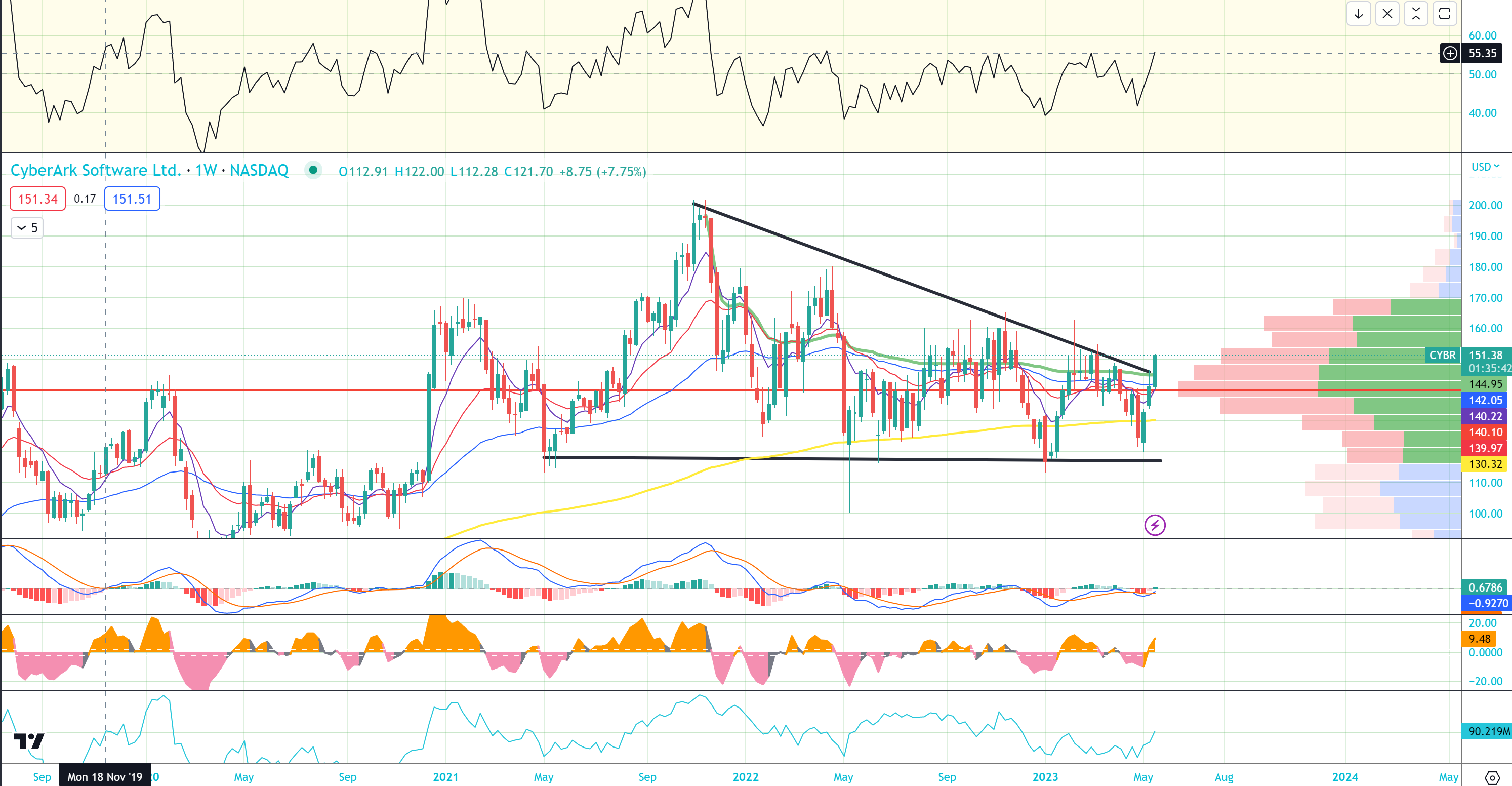
CyberArk (CYBR) on 4/17 with an unusual buy of 1000 December 2024 $160/$230 call spreads and a lot of earnings reports due from the group the next two weeks while M&A remains a key theme to the group.
CYBR shares are on a third week of a rally working over VWAP from record highs, triggering a bull weekly MACD cross and weekly RSI to the highest level in 18-months while shares show a major long-term trend inflection. The $160 level is the next challenge and above that the $120/$160 range break measures to $200. Shares are also working on a massive monthly bull engulfing candle.
Chart
Set-Ups
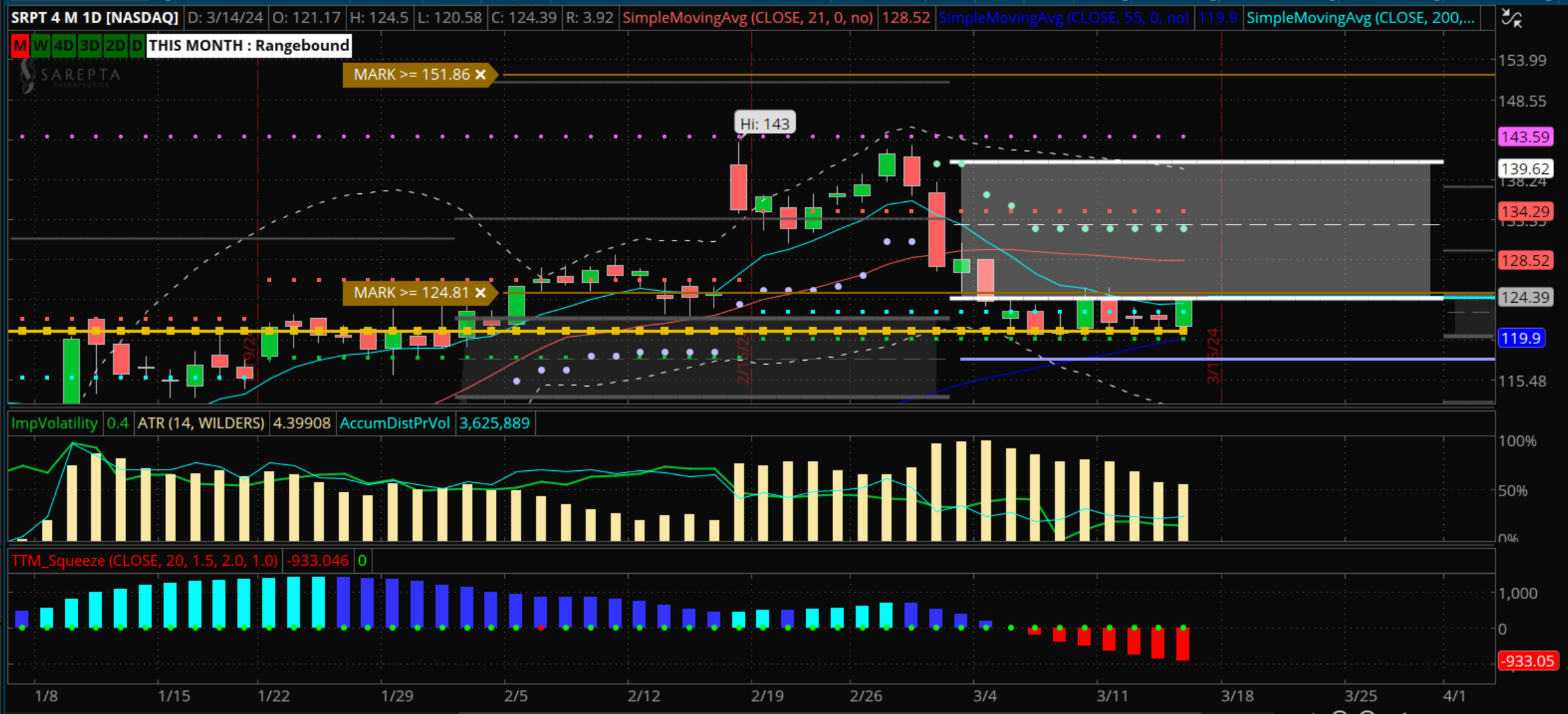
SRPT Bio with rel. strength today and recent upside call spread buys in size, held right on 1-year VPOC and now trying to clear 8-MA and back inside value, over 125 should lead to nice run higher
Market
Talk
Stocks were lower into the open but well off overnight lows as the Israel retaliation was downplayed and Gold/Oil reversed red quickly while Bonds held higher. Breadth was positive the opening thirty and continues to show intraday resilience against SPY 500 though options expiration containing the movements. Energy and Banks showed the most strength with the recent push to value from growth due to heightened market risks and higher yields. Tech continued to see most of the selling with profit taking after some earnings reports are seeing sell the news reactions. Markets will now look to next week for a bunch of key earnings reports, Flash PMI and the BOJ.
The stock market closed with solid losses this week. Market participants had a lot to digest on this busy week in terms of market-moving events. The downside bias was driven by a jump in market rates, a recalibration of rate cut expectations, and increased geopolitical tensions.
What’s On Tap: A big week of earnings with results due from MSFT, GOOG, META, V, TSLA, MRK, ABBV, CVX, PEP, SAP, TMO, TMUS, CAT, DHR, GE, IBM, CMCSA, NOW, INTC, UNP, TXN, RTX, PM, NEE, HON and many more. Macro schedule is lighter with Flash PMIs in focus Tuesday, Durable Goods Orders on Wednesday, BOJ on Thursday and PCE Index in the US on Friday.
Flow
Recap/
Highlights
The start of the week of 4/15 saw some bull flow in the Banks selling off on solid earnings with C and JPM call buys. We had some July put sellers in AFRM, UPST. By midweek Bullish earnings positioning continued in Life Insurers like HIG, AIG, BRK.B. Defense primes LMT, NOC saw size June calls bought into pullbacks ahead of earnings. We had some bull flow finally return to Tech favorites. Bull flows also came back to BTC miners. AMZN and META saw some massive strike adjustments in December 2026 size call positions.
OptionsHawk

OptionsHawk is the premier site for active investors
We provide real time coverage of the market via options activity alerts, fundamental research, breaking news, technical set-ups and alerts, earnings strategies, sell-side commentary and much more. We provide a full suite of research and analysis to allow investors to make better informed decisions.
Our Mission
OptionsHawk is an idea generation and research platform providing accurate, unique, and high quality analysis of the equity and options market in real time. OptionsHawk aims to be the premier community for traders and investors as we simplify and maximize the efficiency of your research process while also handpicking and presenting the best ideas based on our many years of experience in a concise and timely manner.
Our Process
We integrate all methods into our process to give the most thorough assessment of a company, which includes fundamentals, technicals, institutional option and equity flows, management commentary, Macro views, catalyst discovery, and sell-side research.
Our Vision
The Hawk symbolizes the ability to use intuition and higher vision in order to complete tasks or make important decisions. Hawks also encourage you to use laser focus and precision to get things done, and to take the lead in life. The hawk represents focus, strength, and poise, and as messengers to learn powerful lessons or expand your knowledge and wisdom. The Hawk encapsulates our company vision.
Browse and Compare Options Hawk Products